

Is the end of the lack of evidence in prognosis cases in sight?
For many years, the franchise agreement has been, as it is called, an unnamed agreement. This means that, in contrast to, for example, the employment contract and the rental agreement, Dutch civil law does not contain any separate provisions on the franchise relationship. Until recently, the legislator saw no reason to lay down the relationship between franchisor and franchisee in legislation. I say until recently because this seems to be changing now to come.
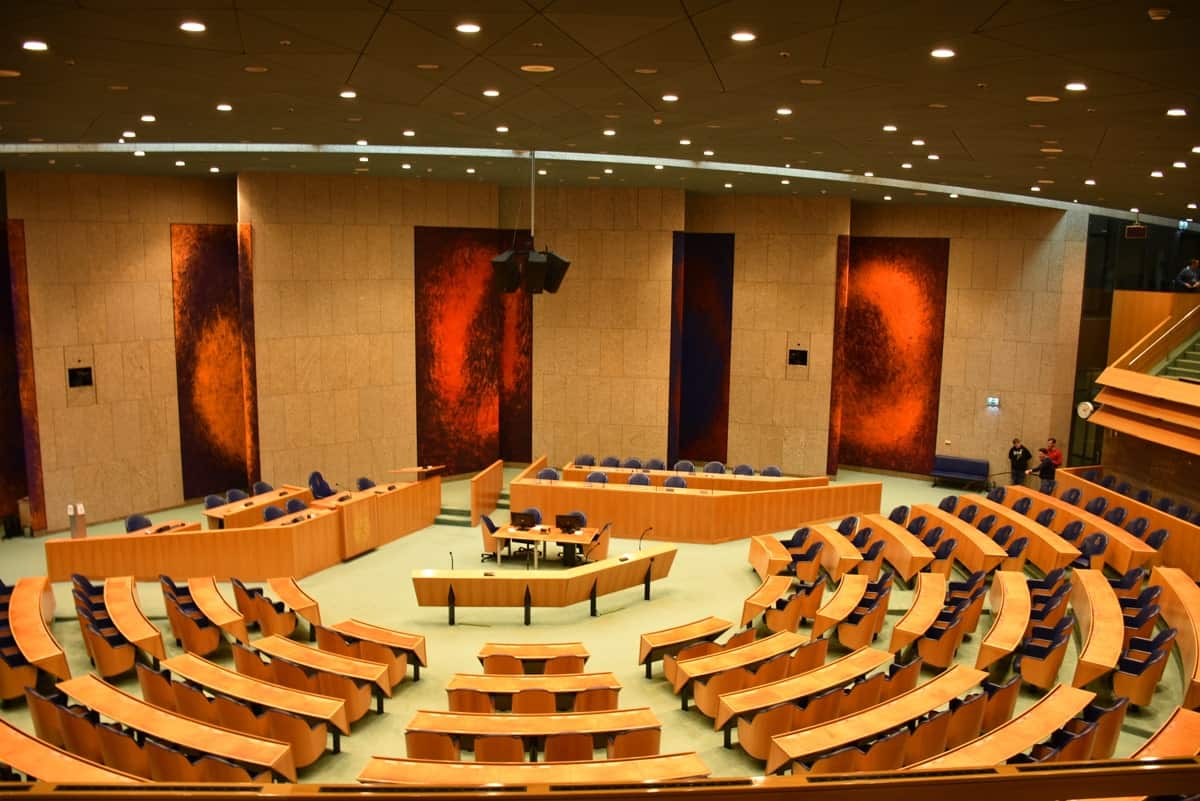
The House of Representatives committee and the Ministry of Economic Affairs have recently planned various round table discussions. A general consultation in this context was recently held in the House of Representatives on 25 June. The subject of discussion was, among other things, the establishment of a disputes committee for Franchise cases. The minister has also stated that the possibilities for a reversal of the burden of proof in forecasting issues should be examined. This means a clear change in the franchise law landscape. I will further elaborate on this aspect of the reversal of the burden of proof below.
The turnover forecast or profit forecast provided by a franchisor when entering into a franchise agreement is a constant source of disputes and litigation. Based on these forecasts, a future expectation is created for the franchisee on the basis of which he or she decides to work with the franchisor. If it later turns out that the forecasts have been too rosy and the expected results cannot be achieved, the franchisee in many cases appeals to error. The franchisee’s position is that the agreement would not have been concluded, at least not under the same conditions, if correct and/or complete information had been provided. On this basis, the franchise contract is nullified and the franchisor is held liable for compensation for the damage suffered by the franchisee on the basis of an unlawful act. The franchise organization is accused of making incorrect forecasts.
There is a great deal of case law on when a miscarriage claim and a claim for damages can be allowed. However, the mere observation that the forecasted results are not being achieved is insufficient. According to the applicable rules of the burden of proof, it is up to the franchisee to demonstrate that the forecasts are incorrect. In the obvious cases where, for example, no location research is the basis for the forecasts or only historical data is used, the evidence is relatively easy to provide. However, in most cases, providing the necessary evidence is not that easy. In those cases, the franchisee must provide sufficient evidence, for example by having its own location survey carried out. This of course involves costs. An example in which the franchisee has exceptionally succeeded in providing the required evidence is the judgment of the District Court of the Northern Netherlands, location Leeuwarden dated 15 January 2014. This judgment also immediately shows how much work has to be done to provide evidence. In this case, for example, a franchisee of Lilly’s Ice Cream and Chocolate had to appoint its own expert to have the prognoses provided by the franchisor recalculated. For many franchisees this is not financially possible, after all they have had to start a procedure as a result of lagging operation and often do not have the financial means to have such an investigation carried out.
If for any reason the franchisee fails to provide sufficient evidence, the claims will most likely be rejected. The burden of proof and the associated risks and costs therefore lie with the, in many cases, the weaker party. Partly for this reason, the awarding judgments lag behind those in which the claims are rejected in number.
Minister Kamp therefore seems to want to change this. He favors the reversal of the burden of proof in prognosis cases. It will then be up to the franchisor to demonstrate that the prognosis is based on correct and complete assumptions and that it is sound. The result of this will be that if the franchisor does not succeed in this proof, the franchisee’s claims are ready for allocation. The franchisee, who often lacks proof, is helped with such a reversal.
Mr T. Meijer – franchise lawyer
Ludwig & Van Dam Franchise attorneys, franchise legal advice. Do you want to respond? Mail to meijer@ludwigvandam.nl

Other messages

Signing a Franchise Agreement in the Digital Age – Mr. K. Bastiaans – dated December 14, 2020
Within today's society, under the guise of 'the new normal', digitization is increasing. The court will discuss in more detail the manner in which an agreement is accepted and the consequences.

The sale of tobacco at supermarkets will be banned in 2024. What are the constraints and opportunities for the supermarket business? – mr. C. Damen – dated December 8, 2020
To promote and discourage smoking cessation, the sale of tobacco in supermarkets will be banned in 2024.

Franchise Act will take effect on January 1, 2021 – mr. AW Dolphijn – dated December 3, 2020
The Franchise Act was already adopted on July 1, 2020, but it has now also been established by Royal Decree that the Franchise Act will enter into force on January 1, 2021.
Supermarket newsletter -29-
Supermarket newsletter -29-

Article Franchiseplus: “Divide the pain” – mr. Th.R. Ludwig – dated December 1, 2020
The corona crisis has brought many franchisors and franchisees into ...





Article De Nationale Franchise Gids: “Settlement problems with franchisee who is a general partnership” – mr. JAJ Devilee – dated November 30, 2020
In a recent dispute, two ex-spouses faced each other in an appeal procedure regarding the question whether the ex-wife forfeited penalty payments against the private company.